SIMULATION STRATEGIES
Simulation means experiment or experimenting with the abstract model in the form of
computer program. Simulations can be done two ways:
- By equal time period and calculating what was happen and
changed in the past time period or
- By calculating the next simulation event.
Simulations basically don't need human interaction unless simulations are teaching tools.
Students need the knowledge how to use simulation. If students use simulations systems
like GPSS they need also the knowledge how to model a real life model into computer
program.
With the simulation as teaching tool students acquire functional background of certain
complex real life systems or what is hidden behind the mathematical presentation of the
model.
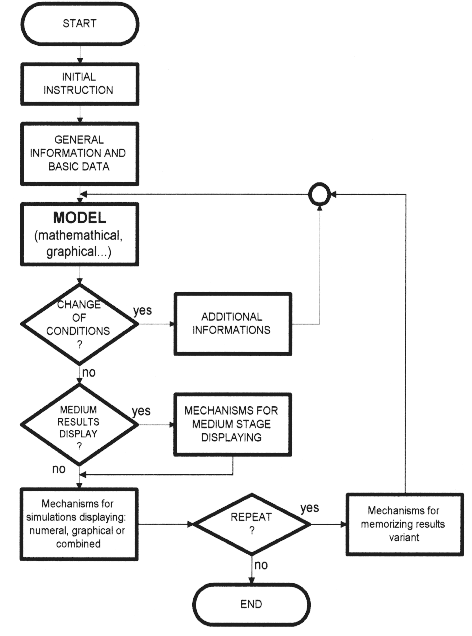
Reasons for use of simulations in the process of education
are:
- Research subject is too big (planet movement) or too small (molecules, atoms, cells)
- Processes are too fast (chemical or atom reactions) or too slow (evolution, tectonic
movements, growth of plants)
- We don't have enough test subjects for conduction experiment (genetics of animals and
plants)
- Some experiments are too costly
- Some experiments are dangerous
- Data gathering is too costly, mathematical calculations without computers would take too
much time
- Some experiments require special manual skills we don't have
- Research object is too complex for ordinary experimental methods (ecology, economy,
social systems)
- Certain experiments are prohibited (medical)
- Use of instruments would change the way the real process would react
Experiments are limited to certain, mostly very limited area of measurements. Computer
simulations are limitless.


